A small history museum has a storage room. Inside are a few dozen items collected decades ago, donated by a founding family, never fully catalogued. No one currently on staff knows whether any of it falls under NAGPRA. If this describes your museum, you are not behind. You are in the same position as most small museums in this country.
The Native American Graves Protection and Repatriation Act has applied to federally funded museums since 1990. For 30 years, enforcement was thin. Small institutions were reasonable to assume NAGPRA was a large-museum problem. That assumption no longer holds. This is new, unfunded, unfamiliar work. It is landing on people who are already stretched thin. Taking it seriously now is an act of good faith, not an admission of failure.
Why this matters now
The Department of the Interior issued a final rule revising NAGPRA regulations, effective January 12, 2024. The rule gives museums and federal agencies five years to consult with tribes. It also requires them to update their inventories of human remains and associated funerary objects. That deadline lands in January 2029. That gives a small museum real time to build something sustainable, rather than scramble.
The 2024 rule also changed the basic posture of compliance. Museums must now get free, prior, and informed consent before exhibiting human remains or cultural items. The same consent is required before granting research access to them. That consent must come from lineal descendants, tribes, or Native Hawaiian organizations. If your museum has items on display without documented consent, that is worth a conversation soon. It is not a source of alarm. Most museums are in exactly this position right now.
The rule also shifted who carries the burden of proof. Under the old system, tribes often had to prove a cultural connection to get items back. Now museums and universities must show they have the right to retain items in the first place. For a small museum with thin records, this can feel daunting. It also means the museum is no longer asked to be the expert on someone else’s heritage. That responsibility now sits more fairly, with consultation as the shared path forward.
Understanding the federal funding question
The rule defines a covered museum as any institution that receives federal funds and holds human remains or cultural items. That definition is broader than many small museums realize. It has created genuine, widely shared confusion since 2024.
The most common question, understandably, is about pandemic relief. The CRM industry raised this directly with the National NAGPRA Program office. The answer was careful rather than absolute. A museum or firm that took a Paycheck Protection Program loan might be subject to NAGPRA. The same is true for one holding a contract with a federal, state, or local agency. It depends on the specific nature of those funds. The Program Office said what matters is the purpose of the funds. Were they for procurement of property or services for the government’s direct benefit? Or were they a compensatory payment that falls under a narrow exception? In plain terms, there is no simple yes or no answer from a distance. A museum that took pandemic relief funds deserves a real look at its own situation, not a guess either way.
This uncertainty runs in both directions, so it is worth naming clearly. A museum that has never taken federal funds is not currently required to comply under the statute as written. This applies to museums that rely only on endowment income, donations, and admissions. If that is genuinely your museum’s situation, it is worth confirming and documenting, not assuming.
Clearing up a common misunderstanding about private land
One piece of misinformation circulates more than almost any other. It is an easy one to pick up. The belief is that an item is automatically exempt from NAGPRA if it came from private land. Federal or tribal land is treated differently, so the logic seems to follow. It does not.
It is true that finding and keeping an ancient object on private land is generally legal for an individual. This is where the myth comes from. But that legal status belongs to the individual collector, not to the object once it changes hands. The National Park Service is direct about this. Items removed from private or state land are governed first by state and local law. But once they enter the possession of a museum that receives federal funds, they may still be subject to repatriation. Ownership history does not erase a cultural claim. It only changes who was legally allowed to hold the item at each stage of its life.
“Ownership history does not erase a cultural claim. It only changes who was legally allowed to hold the item at each stage of its life.”
This matters enormously for small museums. So many small collections exist precisely because of this pattern. A farmer’s family found arrowheads and stone tools while working their fields for generations. They kept a cigar box of favorites. Eventually, they donated the box to the local historical society, along with the family’s other memorabilia. That donation, made in good faith and often decades ago, is exactly the kind of transfer the private-land myth gets wrong. The item’s earlier legal status on private land has no bearing on the museum’s obligations. What matters now is that the museum holds the collection and receives federal funds.
Surface finds are the norm, not the exception
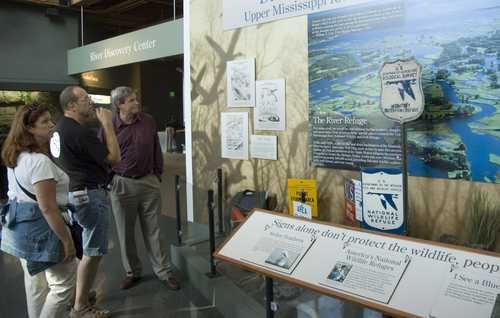
Small museum collections are full of items with no excavation record at all. Some were picked up from a plowed field. Others came from a riverbank or an eroding bluff, long before anyone was thinking about provenance. These are usually called surface finds. They make up a large share of what sits, quietly undocumented, in small museum storage rooms across the country.
The Dubuque County Historical Society is refreshingly candid about exactly this situation. It operates the National Mississippi River Museum & Aquarium in Iowa. The museum holds about 26,000 artifacts. It has said publicly that most of its Indigenous items came through early donations from local private collections. There is no clear record of how those original collections were assembled. Rather than treat that gap as an embarrassment, the museum has made its review process public. A plain-language FAQ explains what NAGPRA requires. It confirms the museum holds no human remains. It also states the museum’s intention to apply for an extension if the review takes longer than the five-year window allows. That kind of transparency, offered without defensiveness, is exactly what a good-faith process looks like from the outside.
A surface find with no known findspot is genuinely harder to research than an excavated item with field notes. That is a real, practical difficulty, and a common one. It simply means consultation, rather than documentation alone, becomes the primary tool. That tool helps a museum understand what it holds and where an item may belong.
Small museums already doing this work
It helps to see what this looks like in practice, at an institution’s own scale. Not every example needs to come from the Smithsonian or a major university. Some of the clearest examples come from museums far smaller than any named so far.
The Wyandotte County Historical Museum, in Bonner Springs, Kansas, is about as small and quiet as this work gets. Its Native American holdings run to an estimated 5,000 artifacts. Much of it was donated decades ago by an amateur local collector. It had simply sat in boxes in a closet for years. The county recently hired a single curator of collections to review the entire holding. That curator works alongside the museum’s one director. There is no large staff here and no large budget. There is only a small team, quietly working through a real backlog. That is what the ordinary version of this work looks like. It is entirely manageable at that scale.
The Greater Kent Historical Society runs a small, volunteer-staffed museum in a historic house in Kent, Washington. It did not have a collections policy at all until 2024. That year, a graduate student helped the society and its volunteers build one from scratch. The society is candid on its own website about whose land the museum sits on. It names the traditional homelands of the Duwamish, Green River, and White River peoples. It has also welcomed a tribal carver to work on-site, creating a piece for permanent display. None of this required a large institution. It required a willingness to ask for help. It also required a genuine, ongoing relationship with the tribes connected to that land.
The Windham Textile and History Museum, known locally as the Mill Museum, is in Willimantic, Connecticut. It shows how a small museum can build NAGPRA directly into its everyday paperwork. Its collections policy defines its curator role as “the Museum staff person (whether paid or volunteer).” That is a small but telling detail. It shows the policy was written for an institution that may not always have paid staff on hand. That same policy names repatriation under NAGPRA as one of only a few valid reasons to deaccession an object. It sits in the same basic document that governs everyday collections decisions, rather than a separate, intimidating process of its own.
The University of Missouri’s Museum of Anthropology is a modest academic museum. It built its NAGPRA relationships proactively. It sent summaries of its full holdings to every federally recognized tribe, Alaska Native village, and Native Hawaiian organization in the country. It did this rather than waiting to be asked. It has also held annual consultation and documentation grants since 2017, to keep that relationship active.
The New Mexico State University Museum offers an encouraging, if slow, example of recovery. Staff there took more than 20 years to complete a required inventory. The delay came from turnover and a collection that was poorly documented from the start. New staff restarted the process in 2015, with fresh strategies for inventory and consultation. They went on to complete successful repatriations. Two decades is a long runway. But it shows that a stalled process can always be picked back up, and that starting late is still starting.
The Dubuque County Historical Society, described above, shows what an honest mid-process museum looks like. It is public about what it does not know. It is clear about its timeline. And it is willing to ask for more time, rather than rush a review.
Free training built specifically for small and local museums also exists. A free introductory webinar, “NAGPRA for the Local Museum,” was developed for exactly this kind of institution. It was built for the museum with no NAGPRA staff and a collection of uncertain origin. It remains freely available through the Foundation for Advancement in Conservation’s Connecting to Collections Care program.
Where the work gets hard, and how museums are meeting it
Most small museums that fall behind on NAGPRA are not acting in bad faith. The work simply takes time. Time is the one resource a skeleton crew rarely has to spare.
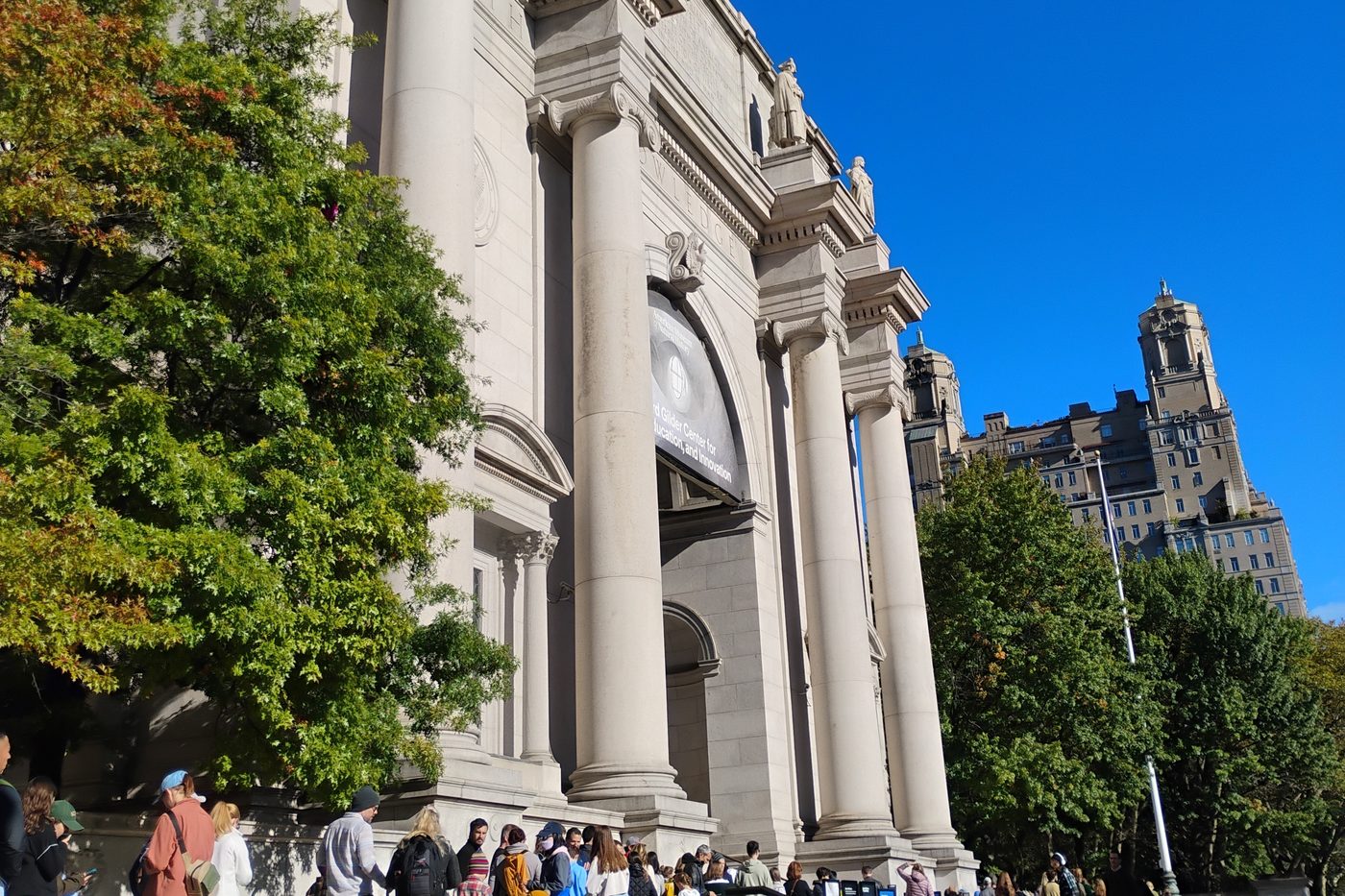
One pattern worth a gentle look is long-standing display. It is easy for items to feel settled, simply because they have always been on view. Under the current rule, display and research access call for documented consent first. The American Museum of Natural History closed two major exhibit halls in 2024 out of care for getting this right. Its president acknowledged that the halls reflected an earlier era’s limited respect for Indigenous peoples. A small museum does not need to close a gallery to take the same lesson. A short, honest review of what is on display, and what consent exists for it, is a strong and manageable place to start.
Another pattern is trying to carry this work alone. That is often less a choice than a simple result of limited staff time. Consultation works best as a genuine relationship, though, not a one-time notice. Reaching out earlier tends to make the whole process feel lighter rather than heavier.
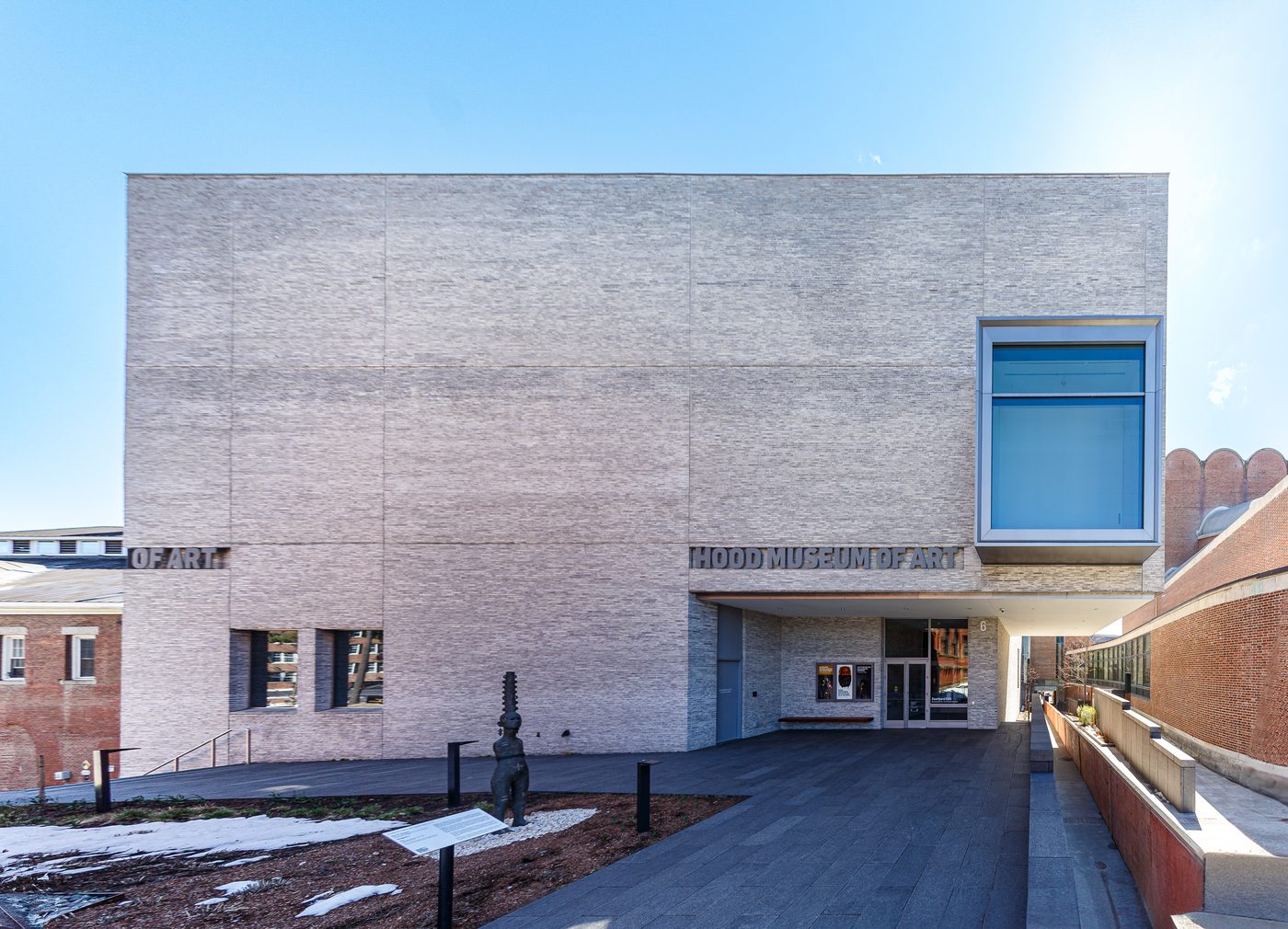
Dartmouth’s Hood Museum shows what it looks like when a gap surfaces anyway. It also shows how a museum can meet that moment with care. In a proactive compliance review, the museum discovered skeletal remains long used as teaching aids in anthropology classes. Faculty and students had handled them unknowingly, as recently as fall 2022. They were in fact Native American. Dartmouth’s president apologized to the community. The college brought in outside osteologists and archaeologists to re-inventory the collection. The story here is not one of failure. It is a museum that went looking for gaps and owned what it found. That is exactly what doing this work well looks like, even when what it finds is hard.
A practical starting point
A small museum without a NAGPRA program does not need to solve everything this year. It needs one honest, defensible first step, and then another.
- Start with a written policy. Even a short one-page policy helps. Name who is responsible for NAGPRA compliance, and what happens when a question comes up. This puts a museum in a good position, and takes far less time than staff usually expect.
- Take inventory of what you don’t know. Before cataloguing every object, list the collections or accession groups where origin, donor history, or cultural affiliation is unclear. This list is the actual scope of the work. For most small museums, it is smaller than it feels at the outset.
- Pull the accession files first. Donor letters, old catalog cards, and early registrar notes often hold geographic and cultural clues. Formal collection records tend to lose these details over time. This step is detective work, not confession.
- Check before assuming private-land origin or a surface find puts an item outside NAGPRA. Confirm the museum’s actual federal-funding status. Also confirm the item’s full custody history, before drawing conclusions either way.
- Identify which tribes to contact. In Oregon, this means the nine federally recognized tribes. It also means any tribal cultural resources offices already active in repatriation work. Contact information changes often, so verify it directly rather than relying on an old list.
- Reach out before there is a deadline. Frame a first contact as beginning an inventory process and wanting to consult early. That is welcomed far more warmly than a first contact that follows a legal notice. It sets a tone of partnership from day one.
- Document every step. The 2024 rule shifted the burden of proof to museums. A clear paper trail showing good-faith effort protects the institution. It also honors the tribes the museum works with.
- Ask for help early. A NAGPRA coordinator, a consulting archaeologist, or a compliance consultant costs far less than the staff time lost to a stalled, undocumented process. Asking for help is a sign of good stewardship, not inadequacy.
- Look at federal grant funding before assuming there is no budget. NAGPRA Consultation/Documentation grants from the National Park Service fund exactly this early-stage work. That includes identifying tribes, reviewing accession records, and holding consultation meetings. Current awards range from $5,000 to $150,000, with no cost-share required, funded through Grants.gov under Assistance Listing 15.922. The Florida Museum of Natural History used a series of these grants, starting in 2021. It hired temporary collections staff and worked through its inventory region by region. That is a model any small museum can scale down to its own size.
The Oregon context
Oregon has its own layer of support and accountability here. Governor Kotek reestablished the state’s Task Force on Oregon Tribal Cultural Items by executive order in January 2024. That restarted work first begun in 2017. The task force is building a process for asking state institutions and agencies what tribal cultural items they hold, whether in storage or on display. Oregon was the first state in the nation to report survey findings on tribal cultural items, back in 2019. The task force’s work then paused during the pandemic.
That task force’s direct scope covers state agencies, universities, colleges, and public schools. But its existence is good news for a small museum trying to figure out where to start. Oregon’s nine sovereign tribes and the state government are actively building infrastructure for this work. That means a small museum reaching out today is not asking tribes to build a process from scratch. A museum that engages early gets to be a partner in that relationship, on its own timeline. It is not just a name that shows up on a list later.
Where to go from here
“NAGPRA compliance is not a test any museum can fail by starting small.”
NAGPRA compliance is not a single event. It is not a test any museum can fail by starting small. It is an ongoing relationship between a museum and the tribes connected to its collection, built one honest conversation at a time. The five-year deadline set in 2024 gives every small museum real, workable time, provided the work begins now rather than later.
A one-page policy and an honest list of unknowns is enough to begin. The rest follows from there, one consultation at a time. No small museum has to walk that path alone.
Ballard Spahr. “Department of Interior Revises Regulations for NAGPRA” (summary of the 2024 regulations and five-year deadline; ballardspahr.com).
Taft Law. “NAGPRA 2024: Revamped Rule Strengthens Process for Museums and Universities” (consent and consultation changes; taftlaw.com).
University of Denver, Art Collection Ethics. “A New Era of Repatriation: Evaluating 2024 NAGPRA Changes” (shift in burden of proof; liberalarts.du.edu).
American Cultural Resources Association. “Update on New NAGPRA Regulations” (federal-funding scope, PPP loans, government contracts; acra-crm.org).
Tufts University Museum Studies Blog. “We Need to Talk About NAGPRA — But What Is It?” (statutory definition of “museum” and its limits; sites.tufts.edu).
U.S. National Park Service. “NAGPRA Compliance” (private and state land; nps.gov/subjects/nagpra).
Cultural Property News. “A Primer: NAGPRA, ARPA and the Antiquities Act” (private ownership of items from private land; culturalpropertynews.org).
National Mississippi River Museum & Aquarium (Dubuque County Historical Society). NAGPRA page (rivermuseum.org/nagpra).
University of Missouri Museum of Anthropology. NAGPRA page (anthromuseum.missouri.edu).
Flatland KC (Kansas City PBS). Coverage of the Wyandotte County Historical Museum’s Indigenous holdings review (flatlandkc.org).
Alvis, Allyson. “Cohesive Collections Planning” (Greater Kent Historical Society collections policy project). University of Washington ResearchWorks, 2024 (digital.lib.washington.edu).
Greater Kent Historical Society / Kent Museum. Homepage and land acknowledgment (kenthistoricalmuseum.org).
Windham Textile and History Museum (the Mill Museum). Collections Policies (millmuseum.org).
Museum Anthropology (Wiley). New Mexico State University Museum case study, 2026 (anthrosource.onlinelibrary.wiley.com).
Connecting to Collections Care (Foundation for Advancement in Conservation). “NAGPRA for the Local Museum” webinar (connectingtocollections.org).
Archaeology Southwest. “Continuing Coverage: US Museums Respond to New NAGPRA Regulations,” Jan. 31, 2024 (archaeologysouthwest.org).
Hood Museum of Art, Dartmouth College. NAGPRA page and discovery of misidentified remains (hoodmuseum.dartmouth.edu).
Kelley, Nanette. “Private Museums Could Face NAGPRA Scrutiny.” ICT (Indian Country Today) (ictnews.org).
Grants.gov. FY2025 NAGPRA Consultation/Documentation Grants listing, Assistance Listing 15.922 (simpler.grants.gov).
Florida Museum of Natural History. “Florida Museum Receives NAGPRA Grant to Aid Repatriation Efforts” (floridamuseum.ufl.edu).
Wallowa County Chieftain. “Kotek Reestablishes Task Force for Tribal Cultural Items” (wallowa.com).
Oregon Governor’s Office. “Governor Kotek Reestablishes Task Force on Oregon Tribal Cultural Items” (apps.oregon.gov).
Photographs: individually credited in captions. The Dubuque image is in the public domain; the Hood Museum and AMNH images are used under CC BY 4.0 via Wikimedia Commons.
All facts above were verified directly against the source in 2026. Figures tied to open grant cycles or ongoing reviews, such as award amounts or task force status, should be checked again close to publication.