This is a local action guide for preservation advocates in Lane County, Oregon — and a template any region can adapt.
The Advisory Council on Historic Preservation is quietly moving a draft rule through federal review that would weaken protections for historic and cultural sites across America. If it passes, the McKenzie River, the Three Sisters Wilderness, sacred tribal lands, and countless places you know would lose the legal protections that currently prevent federal agencies from destroying them without consultation. This is a winnable fight, but only if you act now.
What's at stake here, right now
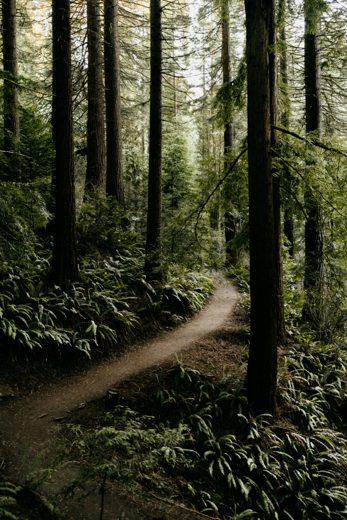
Federal transmission line projects and infrastructure upgrades currently go through Section 106 review. Without it, habitat destruction and historic sites lose protection.
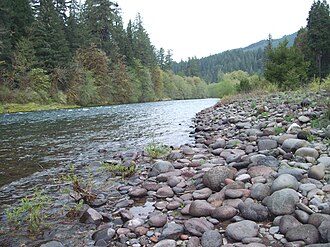
Historic structures, recreation sites, and salmon habitat are vulnerable to federal dam operations, pipeline projects, and hydroelectric expansion.
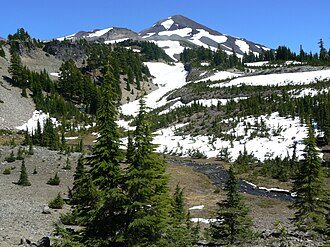
A sacred landscape and one of Oregon's most important wild areas. Federal fire management projects would bypass tribal consultation and environmental review.
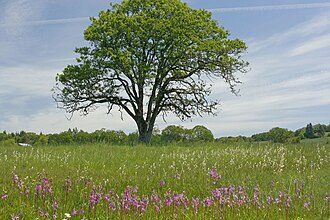
Downtown historic districts, covered bridges, pioneer sites, and cultural landmarks in the Willamette Valley lose review protections for highway, development, and infrastructure projects.
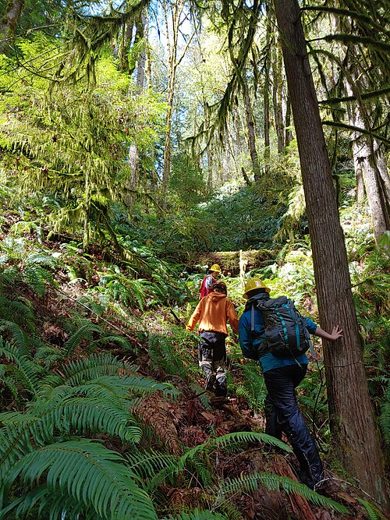
Federal timber sales, transmission corridors, and infrastructure on BLM and National Forest lands would no longer require meaningful consultation with communities and tribes.
Chinook Indian Nation, Confederated Tribes of Warm Springs, Confederated Tribes of the Umatilla Indian Reservation, Klamath Tribes, Burns Paiute Tribe, Confederated Tribes of the Siletz Indians, Confederated Tribes of Grand Ronde, Coquille Indian Tribe, and Cow Creek Band of Umpqua Tribe of Indians lose the right to be consulted on federal projects affecting sacred sites and cultural landscapes.
How Section 106 actually works
Section 106 of the National Historic Preservation Act (NHPA) is a federal process that requires agencies to consider the impact of their projects on historic and cultural properties before they move forward. It has been the backbone of historic preservation for 55 years.
When a federal agency proposes work — a transmission line upgrade, a highway project, a dam operation, a timber sale on federal land — Section 106 kicks in. It requires:
- Consultation with State Historic Preservation Offices (SHPOs), Tribal Historic Preservation Offices (THPOs), and local stakeholders
- Public engagement so community voices are heard
- Real consideration of how to avoid, minimize, or mitigate damage to historic sites
- Independent review of federal agencies' work
The process works. This isn't bureaucratic gridlock; it's people protecting places.
What the ACHP wants to change, and why you should care
The proposed changes would fundamentally weaken these protections. Here's what would happen:
Right now, federal agencies must try to avoid damage to historic sites. If they can't avoid it, they must minimize it. If they can't minimize it, they must mitigate it. The proposed rule replaces this with a vague directive to merely "address" adverse effects.
In plain terms: a federal agency could destroy a historic site as long as they say they "addressed" it. No real obligation to prevent harm. No requirement to find alternatives. No requirement to listen to you.
Agencies can simply choose not to solicit your input. Your community loses its voice on decisions that affect your places.
Tribal nations lose the right to consultation on sacred and cultural sites. This strikes at tribal sovereignty and cultural rights.
Local governments and states lose the right to even know about federal projects affecting their communities.
Agencies police themselves. There's no independent check on whether they actually followed the law.
Entire categories of federally connected projects get blanket exemptions from review.
Once these changes pass, they're nearly impossible to reverse, and generations of places would be gone.
In Lane County, this means transmission line projects through the Cascades could proceed without tribal consultation. Highway projects could move forward without checking whether they'll destroy historic structures. Federal dam operations on the McKenzie could happen without meaningful environmental or cultural review. Federal timber sales on public land — no consultation with the communities nearby or the tribes whose sacred sites are involved.
Why this moment matters
The fight isn't over. Here's where things stand:
The ACHP Vice Chairman signals intent to revisit Section 106. Working groups form to draft changes.
Draft recommendations sent to ACHP members. A vote happens via email within a week, with no public meeting and no discussion.
The draft rule is under OIRA interagency review (up to 90 days). This is when opposition has the most impact.
A Notice of Proposed Rulemaking publishes in the Federal Register. You get a 30–60 day public comment window — the moment to make your voice count. After that, the rule could be finalized.
Grassroots advocates hold significant power. Through community networks, congressional outreach, and the public comment period, you can shape the outcome of this fight. It's winnable, but only if you act.
Your action plan (next 30 days)
The rule is in OIRA review now (up to 90 days). The public comment window comes after — 30–60 days to make your voice heard. After that, this could become law. The window for opposition is small.
Week 1: Make noise federally
Request an OIRA meeting. Email the Office of Information and Regulatory Affairs to request a meeting to voice opposition. Even denied requests signal opposition volume. Make the argument: the proposed changes violate Executive Order 13132 (Federalism) — they remove states' voice from federal policy. Don't just say it's bad; explain what it means for Oregon: transmission lines, timber sales, and water projects without state involvement or tribal consultation.
Call your House member and senators now. It's August recess, so they're in district. Make appointments, visit in person if possible. Bring them to the McKenzie River. Show them a historic bridge. Make it real. Connect them to the Confederated Tribes of Warm Springs, and invite tribal leaders to meet with your representatives.
Week 2: Move your city and county
Ask Eugene City Council for a resolution opposing the changes. Request a city council meeting or submit written testimony. Frame it as a local issue: federal projects affecting Eugene's historic neighborhoods, the McKenzie River's economic value to recreation and tourism, and tribal consultation rights.
Contact Lane County commissioners and ask for county support. Escalate through the League of Oregon Cities and the League of County Commissioners — cities and counties nationwide are watching this.
Week 3: Build your coalition
Reach out to:
- The Confederated Tribes of Warm Springs (tribal consultation on federal projects is on the line)
- Oregon State Historic Preservation Office (SHPO)
- Native American Graves Protection and Repatriation Act (NAGPRA) coordinators
- Environmental groups working on forest, river, and land issues
- Main Street programs and downtown business associations
- Architects and design professionals
- Land trusts and conservation groups
- University of Oregon (archaeology, anthropology, and environmental studies departments)
Meet. Share the specific vulnerable sites in this guide. Agree on key messages. Coordinate public comment.
Week 4: Prepare for public comment
Start drafting your public comment now. Use specific local examples: the McKenzie River, Three Sisters Wilderness, sacred tribal sites, historic structures. Explain what Section 106 review accomplished for your community. Reference the fact that 98% of consultations result in no adverse effect — it's not gridlock, it's working. Reference the loss of the avoid/minimize/mitigate standard as the core damage.
Watch for the National Trust's guidance on language and strategy. They're coordinating; join their list and prepare to submit when the Federal Register notice drops.
Ongoing: tell the story
Post on social media: before and after images of preservation successes in Lane County. Contact local news. Write op-eds for the Register-Guard. Reach out to local podcasts. Show people what's at stake and what they can do. Make it real, not abstract.
The bigger picture
Congress has been working on separate Section 106 legislative reform for some time. The ACHP regulatory change is a parallel, compounding threat: it's a two-front fight. And legal challenges are likely if these rules are adopted, given discrepancies between what the NHPA statute requires and what the proposed rules allow.
But here's what matters for you right now: this is a critical, winnable fight. The people in power have heard the concerns. Grassroots advocates have real leverage through community networks, congressional connections, and the public comment process. Your voice counts.
National coordination
The National Trust is counting 250,000 letters to Congress
The National Trust for Historic Preservation has set an ambitious goal: 250,000 letters from advocates, community leaders, and preservationists to Congress. They're providing templates, updates, and coordination. If you're part of this work, join that effort.
Contact forum@savingplaces.org to connect, coordinate, and get resources. For letter templates, guidance, and the latest updates, visit savingplaces.org.
For organizations
All local organizations: Request an OIRA meeting and coordinate with the National Trust before and after. It matters that they hear from communities, all of you, together.
All advocates: Contact your congressional delegation in district before the August 31 (House) and September 14 (Senate) recess deadlines. This is time-sensitive.
Organizations with legal exposure: Brief your boards on potential litigation coalitions. Assess your fundraising capacity for advocacy now, while the fight is active.
All: Review and strengthen your state and local historic preservation laws and zoning as a backstop. If Section 106 weakens, having strong local protections matters even more.
What stays the same
For now, existing Section 106 consultations continue under current regulations. If you're in an active consultation, don't change your approach, and don't rush or delay MOA execution based on uncertainty. Keep working under the rules as they exist today.
Key resources
- National Trust for Historic Preservation: savingplaces.org (letter templates, webinars, events)
- National Trust Legislative Update: Read the August 21st letter to Congress for recommended framing
- Upcoming events: Legislative Update Webinar, National Preservation Summit (virtual option), Preservation Law Conference (in-person and online)
- Coordination contact: forum@savingplaces.org
Do this in your region
This guide is about Lane County, Oregon. But the rule affects every state, every region, every community with places that matter. If you live somewhere else, replicate this analysis. The template below takes two to three hours and creates a powerful tool for local organizing.
Local impact template for your region
-
Identify federal agencies with presence in your area.
- U.S. Forest Service (national forests, wilderness areas)
- Bureau of Land Management (federal land, grazing, timber, mining)
- U.S. Army Corps of Engineers (dams, water projects, permitting)
- Federal Highway Administration (interstate and federal-aid highways)
- Federal Energy Regulatory Commission (hydroelectric projects, transmission lines)
- Others: EPA, FCC (cell towers), DOE, DoD
-
List specific places Section 106 currently protects in your area.
- Name historic neighborhoods and buildings at risk from infrastructure projects
- Name natural areas, rivers, sacred lands, and tribal sites with federal management
- Name transmission line corridors, water project sites, and federal highway projects underway or planned
- Name historically significant landscapes (mining areas, agricultural sites, settlement areas)
-
Research recent Section 106 successes locally.
- Call your State Historic Preservation Office (SHPO) and ask for examples of Section 106 consultations that resulted in protected outcomes or avoidance of damage
- Ask Tribal Historic Preservation Offices (THPOs) about projects where consultation led to protection of sacred sites
- Ask local governments: what federal projects went through Section 106 review in the past five years?
- Document response times and outcomes; use data to show this process works
-
Identify your decision-makers and their districts.
- House of Representatives: your district representative
- Senate: your two senators
- Governor
- State legislators in your district
- Mayor and city council
- County commissioners
- Land management agency directors for your region
-
Build your coalition.
- Tribal Historic Preservation Offices (THPOs) for: Chinook Indian Nation, Confederated Tribes of Warm Springs, Confederated Tribes of the Umatilla Indian Reservation, Klamath Tribes, Burns Paiute Tribe, Confederated Tribes of the Siletz Indians, Confederated Tribes of Grand Ronde, Coquille Indian Tribe, and Cow Creek Band
- State Historic Preservation Office
- Environmental groups working on water, forests, land, and energy
- Local government associations (cities, counties)
- Main Street programs, downtown associations
- Architecture, planning, and design professionals
- Land trusts and conservation nonprofits
- Academic departments (anthropology, archaeology, environmental studies)
- Media and storytellers
-
Create a one-pager like this guide.
- Show specific places in your region
- Show what Section 106 has protected locally
- Show what's at stake if the rule changes
- Include a clear call to action for your decision-makers
- Share it with your coalition, local media, social media, and elected officials
-
Organize regional action.
- Coordinate OIRA meeting requests across your region
- Coordinate congressional outreach
- Coordinate local government resolutions (cities and counties acting together have more power)
- Coordinate public comment submissions
- Share stories and before/after images across social media
Share what you create. Post your region's analysis, tag the National Trust for Historic Preservation, tag preservation organizations nationwide, and tag indigenous rights organizations. When dozens of regions do this analysis and mobilize, it becomes undeniable.
The ACHP is betting on the fact that most people don't understand what Section 106 is, what it protects, or why they should care. If they can keep the fight national and abstract, they win. If you make it local and specific — here's the McKenzie River, here's what Section 106 protected, here's what we'll lose — they lose.
Right now, opposition is relatively quiet. If dozens of regions create local impact documents, mobilize, and flood Congress and OIRA with coordinated opposition, this rule doesn't pass.
Section 106 isn't just policy: it's the legal framework that gives your community a seat at the table when federal dollars and decisions affect your places. When this process works, it means the historic neighborhoods you're fighting for, the sacred sites your tribal communities protect, and the rivers and forests that define your region get considered. They get a voice. They have a chance to be preserved.
Without it, federal agencies can destroy places without talking to you, without consulting tribes, without considering alternatives. A transmission line can cut through sacred lands. A highway can demolish historic structures. A water project can destroy a river.
That's not acceptable. And right now, you have the power to stop it.
McKenzie River: Jsayre64, Wikimedia Commons, CC BY-SA 3.0.
Three Sisters: U.S. Forest Service, Wikimedia Commons, public domain.
Coastal Range field survey: BLM Oregon & Washington, Wikimedia Commons, public domain.
Willamette Valley white oak: Ed Alverson, Wikimedia Commons, CC BY 4.0.
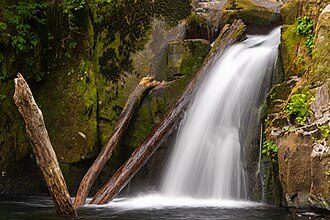
Sweet Creek Falls: Gary Halvorson, Oregon State Archives, Wikimedia Commons, CC BY 4.0.